Why Gambling Looks Different in Texas
The relationship between gambling and Texas is in some way special, which is a relationship entirely lived within the confines of limited and otherwise restrictive legal environments, with the scenario often rendering it quite difficult to talk about the harm of gambling despite all the uncontrolled and online gambling that claims many a residents. The focus of Texas education is not quite on promoting gambling or regulating it but, instead, on the equally important aspects of prevention, self-awareness, and access to support.
Legal Limits and Their Side Effects
Texas law allows only limited forms of gambling, such as lotteries and certain charitable games. While this restricts availability, it does not remove risk entirely. Online platforms, offshore sites, and informal betting circles still expose people to gambling activity without the consumer protections seen in regulated markets.
Education programmes often address this gap directly. They explain how lack of regulation can increase harm, from unfair game mechanics to missing dispute resolution. Understanding the legal landscape helps individuals make informed choices and recognise situations where risk is higher than it appears.
Why Gambling Harm Is Often Hidden
In Texas, gambling problems are frequently underreported. Cultural values around self-reliance and privacy can make people reluctant to seek help. Many do not identify their behaviour as a problem until financial or relationship damage becomes severe.
Awareness initiatives focus on reframing gambling harm as a public health issue rather than a moral failing. By normalising conversations around stress, compulsion, and mental health, education helps reduce shame and encourages earlier intervention.
Common Myths About Gambling Behaviour
One persistent myth is that gambling problems are caused by lack of discipline. In reality, gambling products are designed to encourage repeated play, and certain individuals are more vulnerable due to stress, trauma, or financial pressure.
Educational resources in Texas often break down how probability works, why “near wins” are misleading, and how emotional decision-making overrides logic. Clearing up these myths helps people understand that harm is not a personal defect but a predictable outcome of certain conditions.
Gambling Education and Prevention Resources
Texas' approach to implementation of gambling education involves a blend of dissemination of health-related data, outreach on the community scale, and intervention by independent organizations. These resources are also inclined to reach others before the temptation spirals out of control, as well as to help establish a solution for handling crisis situations.
The programs not only lend emphasis on total abstinence, as they go further to engage in more enlightening programs about money matters or identifying emotional reasons that trigger the decision to engage in gambling. So the information can reach a wider audience who may not see themselves hit with a problem.
School and Community-Based Education
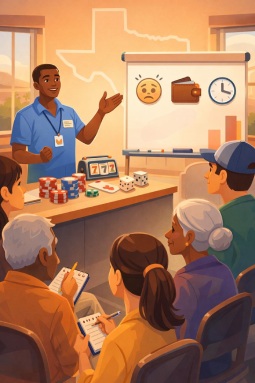
Some educational efforts are integrated into broader financial literacy and mental health programmes in schools and community centres. These sessions often address gambling alongside topics like debt, stress management, and online safety.
By introducing gambling awareness early, educators aim to build critical thinking skills. Young people learn how advertising influences behaviour, how odds are structured, and why chasing losses rarely ends well. This foundation can reduce risk later in life.
Public Health Messaging and Campaigns
Statewide and local campaigns in Texas often frame gambling harm as part of a wider conversation about addiction and wellbeing. Messaging tends to be practical rather than alarmist, focusing on signs to watch for and steps to take if concerns arise.
These campaigns may appear in healthcare settings, workplaces, or public service announcements. Their goal is simple: help people recognise when gambling is no longer just entertainment and point them toward credible sources of help.
Independent Educational Organisations
Several non-profit and advocacy groups operate in Texas with a focus on gambling awareness. These organisations provide workshops, printed materials, and confidential advice without judgement.
While they vary in size and scope, they share a common aim of improving understanding. Many also train professionals, such as counsellors and financial advisors, to spot gambling-related issues and respond appropriately.
Finding Gambling Support Groups in Texas
Support groups remain one of the most effective tools for addressing gambling harm. In Texas, these groups offer confidential spaces where individuals can talk openly with others who understand the experience firsthand.
Finding the right group can take time. Some people prefer structured meetings, while others value informal discussion. Awareness resources often encourage trying more than one option to see what feels comfortable.
Peer Support and Shared Experience

Peer-led groups are built around shared understanding rather than clinical treatment. Participants learn from each other’s experiences, coping strategies, and setbacks.
In Texas, these groups can be especially valuable because they counter isolation. Knowing that others face similar struggles helps reduce shame and makes recovery feel more achievable.
Family and Friends Support Groups
Gambling harm rarely affects only one person. Families and close friends often carry emotional and financial stress without knowing where to turn.
Support groups for loved ones focus on boundaries, communication, and self-care. Education here is just as important, helping families understand that they cannot control another person’s gambling but can protect their own wellbeing.
Professional-Led Group Programmes
Some support groups are facilitated by trained counsellors or therapists. These programmes combine peer discussion with structured guidance on behaviour change, emotional regulation, and financial repair.
In Texas, these options are often linked to broader mental health services. They can be a good fit for individuals who want more direction alongside group support.
Accessing Information and Personal Guidance
Reliable information is essential for making informed decisions about gambling behaviour. In Texas, guidance is available through helplines, educational materials, and one-to-one consultations.
Confidential Helplines and Advice Services
Texas-based and national helplines provide confidential conversations with trained advisors. These services help callers assess their situation, explore options, and decide what support might be useful.
Education is a core part of these calls. Advisors explain patterns of gambling harm, answer practical questions, and help callers feel less alone in the process.
Online Information and Self-Assessment Tools
Many organisations offer educational materials and self-assessment questionnaires designed to prompt reflection. These tools are not diagnostic, but they help people think honestly about their behaviour.
In a state like Texas, where in-person resources may be unevenly distributed, online education plays an important role. It allows people to explore information privately and at their own pace.
Where Awareness Turns Into Action
Over years, gambling awareness has gained gradual importance. Not to control people, rather to empower them with knowledge and confidence about all issues related to gambling. Education has allowed people to be free, ask questions, reduce stigma and fear, and obtain help.